ابحث في النصوص البرمجية عن "bear"
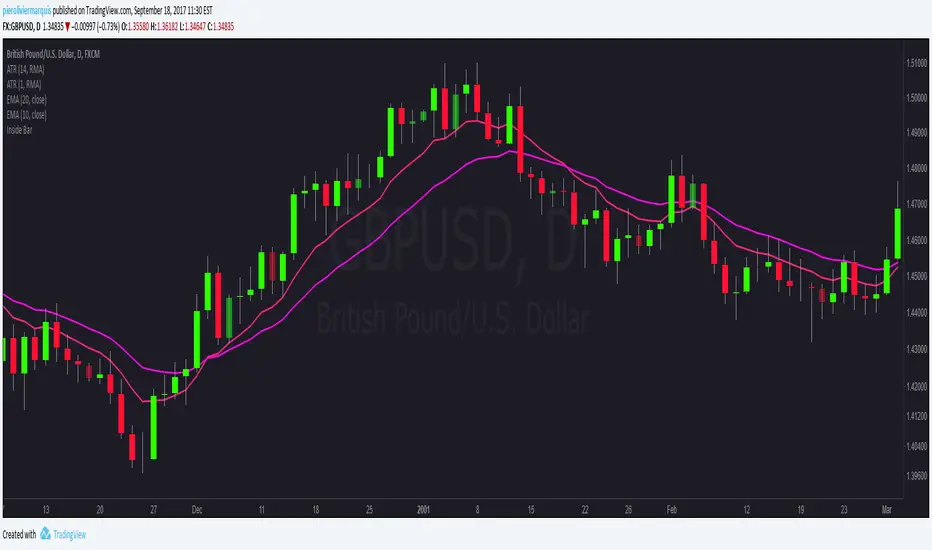
Bullish and Bearish Engulfing Patterns auto detectionThis simple indicator detects automatically most important bullish and bearish candlestick patterns formations. Used to locate potential supply and demand imbalances.
Copyright 2017 Alfonso Moreno www.set-and-forget.com
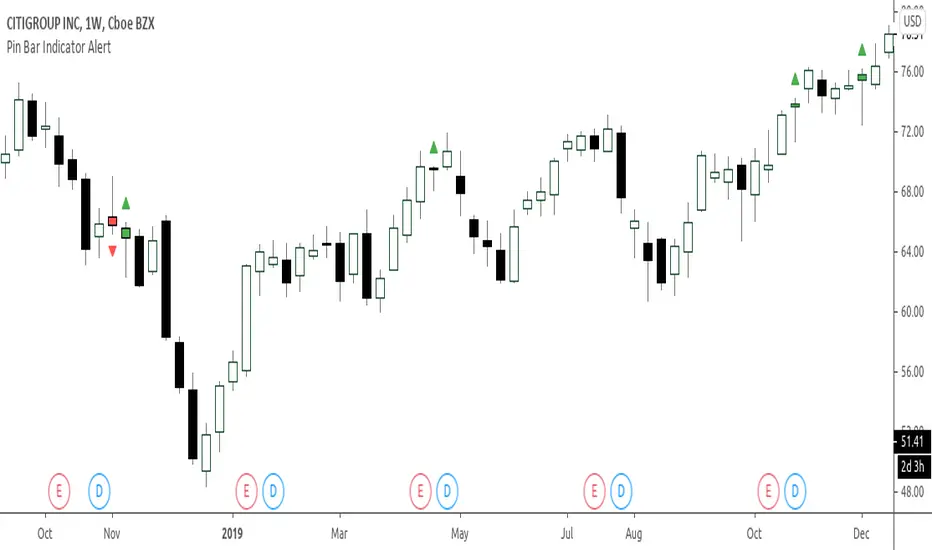
Super Envolvente (Bullish y Bearish)Identificador de Super-envolventes (SE), se encarga de darle un color verde a la SE alzista (Bullish) verde y rojo a la bajista (Bearish).
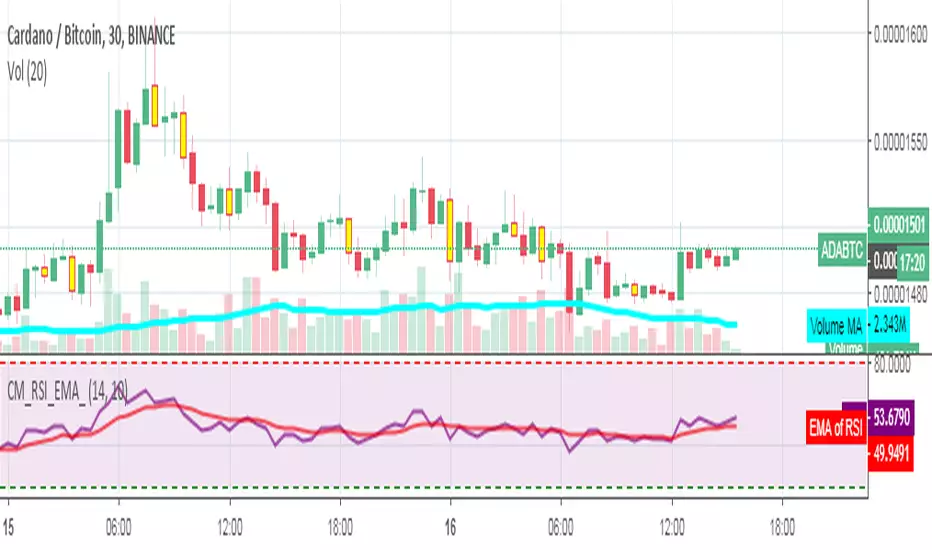
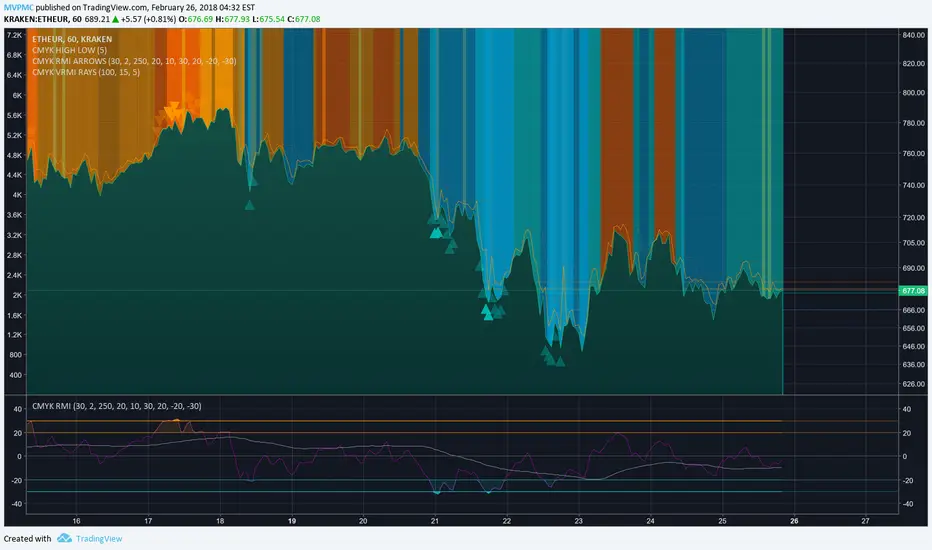
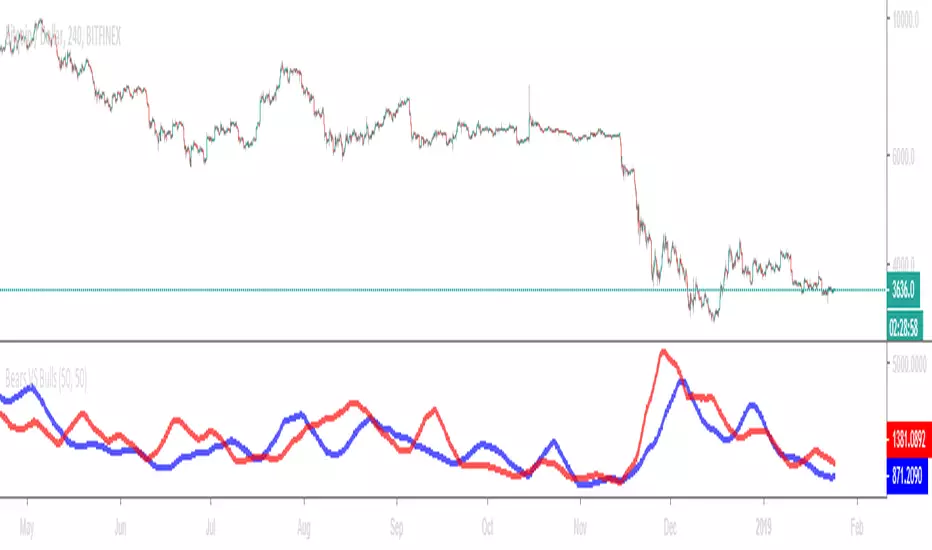
Bears VS BullsThis indicator will work on ANY instrument.
The red line is a moving average of ONLY sellers in the market.
The blue line is a moving average of ONLY buyers in the market.
The period or "length" of the individual moving averages can be adjusted in the indicator settings.
The default, it is set to 50.
Buying and selling trends often provide indications of market moves such as the most recent bottom in Cryptocurrencies.
Feel free to comment and share any indicator concepts or ideas for content you would like to see added to the Technical Indicator Bundle on www.kenzing.com
Bearish Trailing stopIt is a trailing SL. Works very well. Good good very good. Looks like my description needs more, so here is more random text.
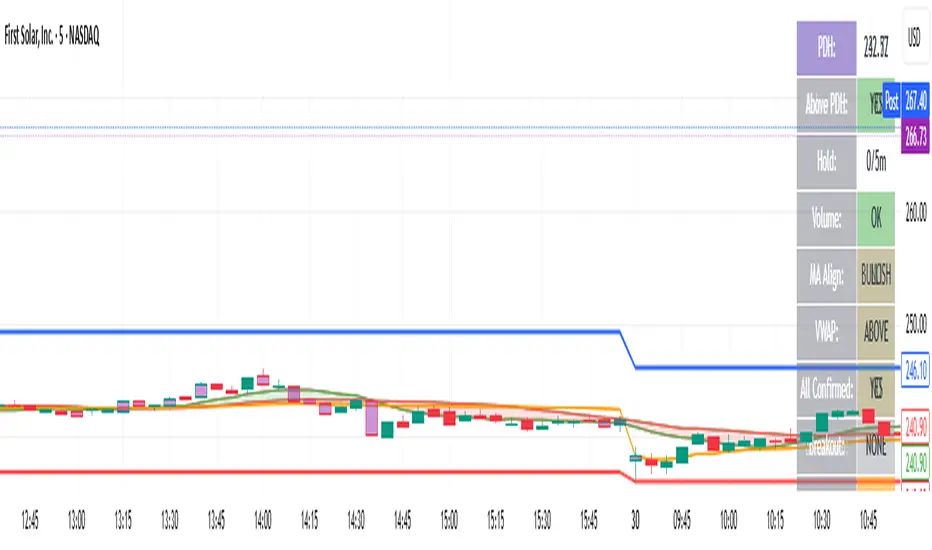
bearish Price Below PDL - Complete Multi-Confirmation Alert🎯 KEY IMPROVEMENTS:
1. Enhanced Alert Visibility:$jmoskyhigh
✅ HUGE triangle down marker with "SELL" text
✅ Alert title: "SELL SIGNAL - PDL BREAKDOWN CONFIRMED"
✅ Prominent info panel with red theme
✅ Clear "SELL ALERT: TRIGGERED" status
2. Better Visual Feedback:
Red frame around info panel
Larger shapes and markers
Color-coded confirmations (green = OK, red = FAIL)
Progress percentage displayed
Breakdown price label
3. Complete Alert System:
Main Alert: "SELL SIGNAL - PDL BREAKDOWN CONFIRMED"
Early Warning: "PDL Breakdown Started - Monitoring"
Reset Alert: "Confirmation Lost - Breakdown Reset"
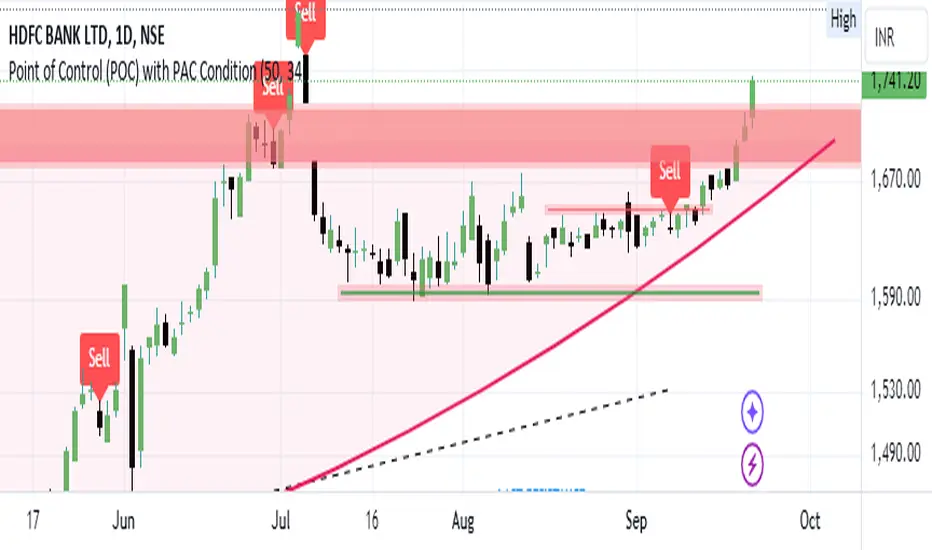
Bearish signal using Point of Control (POC) with PAC by guruThis indicator code helps traders identify potential sell opportunities using several important technical indicators:
Point of Control (POC) – This is the price level where the most volume was traded over the past several days.
Previous Day's Low – This shows the lowest price reached during the previous day.
PAC (Price Action Channel) EMA – These are two moving averages (one based on the low price and one based on the close price) that help determine if the price is trending within a certain range.
Volume SMA – This is a 3-day simple moving average (SMA) of volume, which helps filter out signals based on market activity.
What the Script Does:
Point of Control (POC):
The script looks at the last 50 days (configurable) and calculates which price level had the highest trading volume.
It then plots a red line on the chart at the POC level. This is important because it helps identify areas where there was strong market interest in the past.
Volume Moving Average:
The script calculates a 3-day SMA of volume, but it excludes the current day to avoid premature signals based on today’s trading.
The volume SMA is used to ensure there’s enough market activity (with a threshold set to 25 units) before triggering a sell signal.
Price Action Channel (PAC) EMA:
The PAC consists of two exponential moving averages (EMAs):
The PAC Low EMA: This is based on the low prices over the last 34 periods (configurable).
The PAC Close EMA: This is based on the closing prices over the last 34 periods.
These EMAs help determine if the price is trending above or below certain price levels.
Sell Signal Logic: The script checks three conditions before displaying a "Sell" signal:
Price Below POC and Previous Day’s Low:
The close price must be below both the Point of Control (POC) and the previous day's low.
Volume SMA Above 25:
The 3-day volume SMA must be greater than 25. This ensures the signal only triggers when there’s enough trading volume in the market.
Today’s Low is Above PAC EMAs:
Today's low price must be above both the PAC low EMA and the PAC close EMA. This prevents sell signals when prices are already significantly below the PAC, indicating possible exhaustion in the downtrend.
If all three conditions are met, the script will display a red "Sell" label on the chart, signaling a potential selling opportunity.
No Sell Signal if Price Reverses:
If the price crosses back above the POC or the previous day's low, the script will remove the sell signal and reset for a new opportunity.
Summary of Conditions:
For the script to display a "Sell" label:
The close price must be below the Point of Control (POC) and the previous day’s low.
The 3-day volume SMA (excluding today) must be greater than 25 units.
The low price of the current day must be above both the PAC low EMA and the PAC close EMA.
If these conditions are met, a red sell label appears on the chart as a potential signal for a short (sell) trade.
Bearish FS Continuation S1BB - baby bar / inside bar
DF - downflow, meaning 20MA below 50MA
EXE - execution bar, indicator to short
Mainly to identify execution bar for shorting using inside bar identification and force top
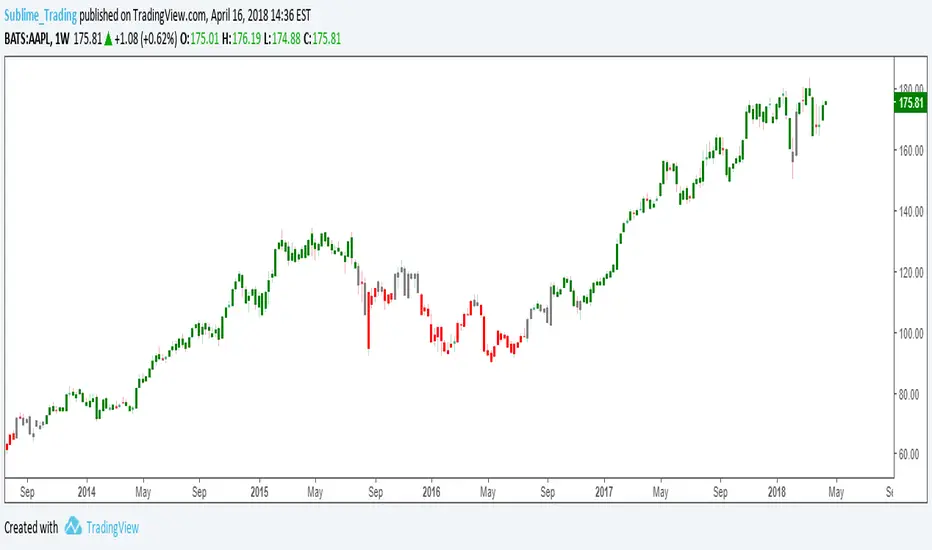
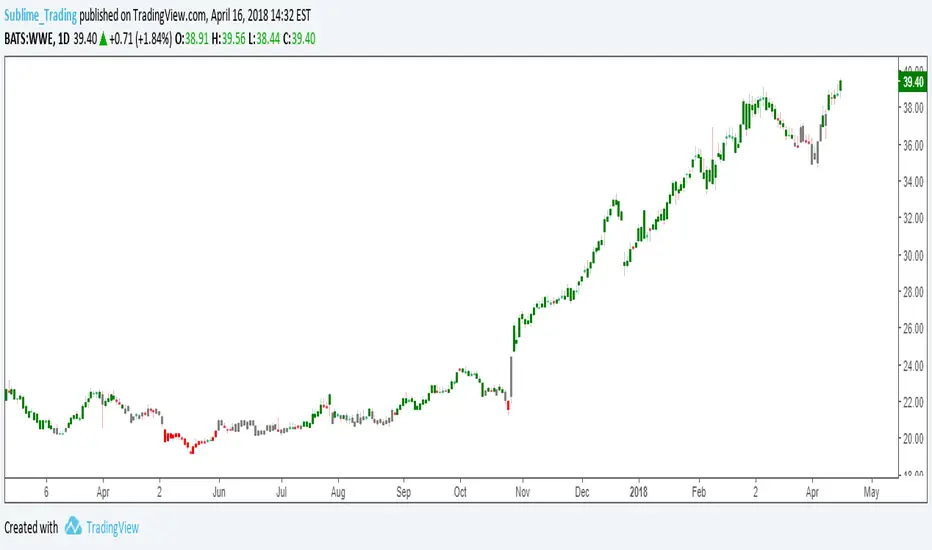
Guneet-ScalperBearish trend candle color change to red with sell print
Bullish trend candle color change to green with buy print
thanks
jas toor
SMC One Candle + AMD Bias (CT Focus)This indicator is a specialized Smart Money Concepts (SMC) tool designed for QQQ on the 5-minute chart. It fuses Tony Trades' "One Candle Rule" execution with the AMD (Accumulation, Manipulation, Distribution) cycle logic found in your previous CRT Pro V2 script.
The primary goal of this indicator is to identify high-probability entries during the Purge Window (9:00 AM – 11:30 AM CT) by detecting when price manipulates morning liquidity before expanding in the direction of the daily bias.
## Core Components
### 1. Master Candle Range (Accumulation)
Timeframe: 05:00 AM – 09:00 AM CT.
Function: It automatically plots the Master High (CRH) and Master Low (CRL). This represents the "Accumulation" phase where orders are built up before the New York open.
### 2. The One Candle Zone (Execution)
Timeframe: 08:35 AM CT (The 5-minute candle immediately following the high-volatility open).
Function: It creates a blue "Value Zone" based on Tony Trades’ logic. This zone acts as the ultimate filter—price must reclaim or break this zone to confirm that the "Manipulation" phase is over and the "Distribution" has begun.
### 3. Multi-Timeframe Daily Bias
Calculation: It tracks the midpoint (Equilibrium) of the previous day's range.
Premium/Discount:
Bullish (Discount): Price is trading above the daily midpoint.
Bearish (Premium): Price is trading below the daily midpoint.
Logic: Signals are filtered by this bias to ensure you are always trading with the higher-timeframe flow.
## Signal Logic Descriptions
### SMC Long (Bullish Distribution)
A Long signal is generated when:
Bias: The Daily Bias is Bullish.
Manipulation: Price has ideally swept the Master Low (CRL) during the open.
The Trigger: A 5-minute candle closes above the 08:35 AM "One Candle" High.
Confirmation: This suggests shorts are trapped and Smart Money is distributing price toward the Previous Day High (PDH).
### SMC Short (Bearish Distribution)
A Short signal is generated when:
Bias: The Daily Bias is Bearish.
Manipulation: Price has ideally swept the Master High (CRH).
The Trigger: A 5-minute candle closes below the 08:35 AM "One Candle" Low.
Confirmation: This confirms a rejection of the opening range, signaling a move toward the Previous Day Low (PDL) or the current Low of Day.
## Visual Guide
Blue Box: The One Candle Zone (Tony Trades' "Line in the Sand").
Gray Stepline: The Master Candle Range (0500–0900 CT).
Yellow Background: The Purge Window (0900–1130 CT), where your logic dictates the highest probability of a successful trade.
Labels: Real-time Daily Bias updates in the top right corner.
btall//@version=5
strategy("AR | AlphaEdge Pro (No-Repaint) v1.0",
overlay=true,
initial_capital=100000,
commission_type=strategy.commission.percent,
commission_value=0.04,
slippage=1,
pyramiding=0,
calc_on_order_fills=true,
calc_on_every_tick=false,
process_orders_on_close=true)
//━━━━━━━━━━━━━━━━━━━━━━━━━━━━━━━━━━━━━━━━━━━━━━━━━━━━━━━━━━━━━━━━━━━━━━
// Inputs
//━━━━━━━━━━━━━━━━━━━━━━━━━━━━━━━━━━━━━━━━━━━━━━━━━━━━━━━━━━━━━━━━━━━━━━
grp1 = "Trend + Signals"
useHTF = input.bool(true, "Use Higher TF Trend Filter", group=grp1)
htf = input.timeframe("240", "Higher Timeframe", group=grp1)
htfEmaLen = input.int(200, "HTF EMA Length", minval=1, group=grp1)
emaFastLen = input.int(21, "Fast EMA", minval=1, group=grp1)
emaSlowLen = input.int(55, "Slow EMA", minval=1, group=grp1)
stAtrLen = input.int(10, "Supertrend ATR Length", minval=1, group=grp1)
stFactor = input.float(3.0, "Supertrend Factor", minval=0.1, step=0.1, group=grp1)
rsiLen = input.int(14, "RSI Length", minval=1, group=grp1)
rsiBull = input.int(52, "RSI Bull Threshold", minval=1, maxval=99, group=grp1)
rsiBear = input.int(48, "RSI Bear Threshold", minval=1, maxval=99, group=grp1)
useVolFilter = input.bool(true, "Use Volume Filter", group=grp1)
volLen = input.int(20, "Volume SMA Length", minval=1, group=grp1)
volMult = input.float(1.2, "Volume Multiplier", minval=0.1, step=0.1, group=grp1)
grp2 = "Risk Management (ATR)"
atrLen = input.int(14, "ATR Length", minval=1, group=grp2)
slAtrMult = input.float(1.6, "Stop = ATR x", minval=0.1, step=0.1, group=grp2)
rr = input.float(2.0, "Risk:Reward (TP)", minval=0.1, step=0.1, group=grp2)
useRiskPct = input.bool(true, "Dynamic Position Size by Risk %", group=grp2)
riskPct = input.float(1.0, "Risk % of Equity per Trade", minval=0.05, step=0.05, group=grp2)
maxPosPct = input.float(20.0, "Max Position % of Equity Cap", minval=1.0, step=1.0, group=grp2)
grp3 = "Breakeven + Session"
useBE = input.bool(true, "Move Stop to Breakeven", group=grp3)
beTriggerATR = input.float(1.0, "Trigger After +ATR x", minval=0.1, step=0.1, group=grp3)
beOffsetATR = input.float(0.05, "BE Offset (ATR x)", minval=0.0, step=0.01, group=grp3)
useSession = input.bool(false, "Trade Only in Session", group=grp3)
sess = input.session("1000-1500", "Session (exchange time)", group=grp3)
//━━━━━━━━━━━━━━━━━━━━━━━━━━━━━━━━━━━━━━━━━━━━━━━━━━━━━━━━━━━━━━━━━━━━━━
// Helper / Filters
//━━━━━━━━━━━━━━━━━━━━━━━━━━━━━━━━━━━━━━━━━━━━━━━━━━━━━━━━━━━━━━━━━━━━━━
inSession = not useSession or not na(time(timeframe.period, sess))
emaFast = ta.ema(close, emaFastLen)
emaSlow = ta.ema(close, emaSlowLen)
rsi = ta.rsi(close, rsiLen)
atr = ta.atr(atrLen)
volOk = not useVolFilter or (volume > ta.sma(volume, volLen) * volMult)
// Supertrend
= ta.supertrend(stFactor, stAtrLen) // stDir: 1 bullish, -1 bearish (TradingView behavior)
stBull = stDir == 1
stBear = stDir == -1
// HTF trend (lookahead_off to reduce repaint risk on historical vs realtime behavior)
htfEma = request.security(syminfo.tickerid, htf, ta.ema(close, htfEmaLen), barmerge.gaps_off, barmerge.lookahead_off)
htfBull = close >= htfEma
htfBear = close <= htfEma
trendOkLong = not useHTF or htfBull
trendOkShort = not useHTF or htfBear
//━━━━━━━━━━━━━━━━━━━━━━━━━━━━━━━━━━━━━━━━━━━━━━━━━━━━━━━━━━━━━━━━━━━━━━
// Entry Conditions (confirmed bar to avoid “intrabar” surprises)
//━━━━━━━━━━━━━━━━━━━━━━━━━━━━━━━━━━━━━━━━━━━━━━━━━━━━━━━━━━━━━━━━━━━━━━
longSignal = barstate.isconfirmed and inSession and trendOkLong and stBull and close > emaFast and emaFast > emaSlow and rsi >= rsiBull and volOk
shortSignal = barstate.isconfirmed and inSession and trendOkShort and stBear and close < emaFast and emaFast < emaSlow and rsi <= rsiBear and volOk
//━━━━━━━━━━━━━━━━━━━━━━━━━━━━━━━━━━━━━━━━━━━━━━━━━━━━━━━━━━━━━━━━━━━━━━
// Position sizing by ATR stop distance (approx; works best on stocks/spot)
//━━━━━━━━━━━━━━━━━━━━━━━━━━━━━━━━━━━━━━━━━━━━━━━━━━━━━━━━━━━━━━━━━━━━━━
f_posQty(_stopDist) =>
// Risk capital = equity * riskPct%
riskCapital = strategy.equity * (riskPct / 100.0)
// Qty to risk roughly riskCapital if stop hits
rawQty = _stopDist > 0 ? (riskCapital / _stopDist) : 0.0
// Cap position size by maxPosPct% of equity
maxPositionValue = strategy.equity * (maxPosPct / 100.0)
maxQty = close > 0 ? (maxPositionValue / close) : rawQty
qty = math.max(0.0, math.min(rawQty, maxQty))
qty
stopDist = atr * slAtrMult
qty = useRiskPct ? f_posQty(stopDist) : na
//━━━━━━━━━━━━━━━━━━━━━━━━━━━━━━━━━━━━━━━━━━━━━━━━━━━━━━━━━━━━━━━━━━━━━━
// Entries
//━━━━━━━━━━━━━━━━━━━━━━━━━━━━━━━━━━━━━━━━━━━━━━━━━━━━━━━━━━━━━━━━━━━━━━
if (longSignal and strategy.position_size <= 0)
strategy.entry("L", strategy.long, qty=useRiskPct ? qty : na)
if (shortSignal and strategy.position_size >= 0)
strategy.entry("S", strategy.short, qty=useRiskPct ? qty : na)
//━━━━━━━━━━━━━━━━━━━━━━━━━━━━━━━━━━━━━━━━━━━━━━━━━━━━━━━━━━━━━━━━━━━━━━
// Exits (ATR SL/TP + optional Breakeven)
//━━━━━━━━━━━━━━━━━━━━━━━━━━━━━━━━━━━━━━━━━━━━━━━━━━━━━━━━━━━━━━━━━━━━━━
isLong = strategy.position_size > 0
isShort = strategy.position_size < 0
entry = strategy.position_avg_price
longSL = entry - stopDist
longTP = entry + stopDist * rr
shortSL = entry + stopDist
shortTP = entry - stopDist * rr
// Breakeven logic
beTrig = atr * beTriggerATR
beOff = atr * beOffsetATR
if isLong and useBE
// if price moved in our favor enough -> raise stop to entry (+offset)
if (close - entry) >= beTrig
longSL := math.max(longSL, entry + beOff)
if isShort and useBE
if (entry - close) >= beTrig
shortSL := math.min(shortSL, entry - beOff)
// Submit exits every bar so they update dynamically
strategy.exit("XL", from_entry="L", stop=longSL, limit=longTP, when=isLong)
strategy.exit("XS", from_entry="S", stop=shortSL, limit=shortTP, when=isShort)
//━━━━━━━━━━━━━━━━━━━━━━━━━━━━━━━━━━━━━━━━━━━━━━━━━━━━━━━━━━━━━━━━━━━━━━
// Visuals + Alerts
//━━━━━━━━━━━━━━━━━━━━━━━━━━━━━━━━━━━━━━━━━━━━━━━━━━━━━━━━━━━━━━━━━━━━━━
plot(emaFast, "EMA Fast", linewidth=2)
plot(emaSlow, "EMA Slow", linewidth=2)
plot(stLine, "Supertrend", linewidth=2)
plot(useHTF ? htfEma : na, "HTF EMA", linewidth=2)
plotshape(longSignal, title="Long Signal", style=shape.triangleup, location=location.belowbar, size=size.tiny, text="L")
plotshape(shortSignal, title="Short Signal", style=shape.triangledown, location=location.abovebar, size=size.tiny, text="S")
alertcondition(longSignal, title="AlphaEdge Long", message="AlphaEdge LONG on {{ticker}} @ {{close}}")
alertcondition(shortSignal, title="AlphaEdge Short", message="AlphaEdge SHORT on {{ticker}} @ {{close}}")
1-Min Gold Taylor Technique# 🟡 1-Minute Gold Taylor Trading Technique - Professional Strategy
## 📊 OVERVIEW
The **1-Minute Gold Taylor Trading Technique** is a sophisticated intraday scalping strategy specifically designed for XAUUSD (Gold) on the 1-minute timeframe. This strategy implements George Douglas Taylor's classic 3-Day Trading Cycle adapted for modern algorithmic trading with precise entry and exit rules.
**Best For:** Gold traders, scalpers, and intraday momentum traders
**Timeframe:** 1-minute (optimal), can work on 3-5 minute
**Instrument:** XAUUSD, GC futures
**Trading Sessions:** London and New York sessions (GMT-based)
---
## 🎯 STRATEGY CONCEPT
### Taylor's 3-Day Cycle (Modernized)
This strategy identifies and trades three distinct market phases:
1. **Accumulation Day** - Range-bound consolidation where smart money accumulates positions
2. **Manipulation Day** - Liquidity sweeps and stop-hunts creating high-probability reversal setups
3. **Distribution Day** - Trending continuation where positions are distributed
The strategy automatically detects these phases through price action and provides clear entry signals during the highest-probability setups.
---
## 🔧 KEY FEATURES
### ✅ Automated Session Tracking
- **Asian Session** (00:00-05:00 GMT) - Range identification only, no trades
- **London Session** (06:00-13:00 GMT) - Primary trading window for manipulation setups
- **NY Session** (13:00-17:00 GMT) - Continuation and distribution trades
### ✅ Liquidity Sweep Detection
- Identifies sweeps of Asian High/Low
- Detects Previous Day High/Low violations
- Configurable sweep buffer to filter noise
- Visual confirmation on chart
### ✅ Multi-Indicator Confirmation
- **VWAP** - Session-based volume-weighted average price
- **20 EMA** - Dynamic support/resistance confirmation
- **SuperTrend** - Trend direction and reversal signals (dot indicators)
- **ATR-based** - Adaptive to volatility
### ✅ Professional Risk Management
- 3-tier profit taking system (33% / 33% / 34% position splits)
- Configurable Risk:Reward ratio (default 1:3)
- Adaptive stop-loss based on volatility
- Automatic end-of-day position closure
- No pyramiding (one position at a time)
### ✅ Visual Trading Environment
- **Asian Range Box** - Yellow box showing consolidation zone
- **Session Backgrounds** - Color-coded trading sessions
- **Previous Day Levels** - High/Low reference lines
- **Entry Signals** - Clear green (long) and red (short) markers
- **SuperTrend Dots** - Visual trend confirmation
---
## 📈 ENTRY RULES
### 🟢 LONG ENTRY (All Conditions Required)
1. **Liquidity Sweep** - Price sweeps below Asian Low OR Previous Day Low
2. **Rejection** - Candle forms lower wick and closes back above the level
3. **Trend Confirmation** - SuperTrend flips bullish (green dot appears below price)
4. **VWAP/EMA Reclaim** - Price closes above VWAP or 20 EMA
5. **Session Timing** - Must be during London or NY session
6. **Automated Signal** - Green triangle appears below candle
### 🔴 SHORT ENTRY (Mirror Logic)
1. **Liquidity Sweep** - Price sweeps above Asian High OR Previous Day High
2. **Rejection** - Candle forms upper wick and closes back below the level
3. **Trend Confirmation** - SuperTrend flips bearish (red dot appears above price)
4. **VWAP/EMA Reject** - Price closes below VWAP or 20 EMA
5. **Session Timing** - Must be during London or NY session
6. **Automated Signal** - Red triangle appears above candle
---
## 💰 EXIT STRATEGY
### 3-Tier Profit System
**TP1 (33% of position):**
- Target: 1:1 Risk:Reward
- Typically at VWAP or Asian range midpoint
- Secures base profit
**TP2 (33% of position):**
- Target: 1:2 Risk:Reward
- Typically at Asian range opposite boundary
- Locks in substantial gain
**TP3 (34% of position - Runner):**
- Target: 1:3 Risk:Reward (default)
- Typically at Previous Day High/Low or beyond
- Maximizes winners
### Stop Loss
- Fixed points below/above entry (default: 6 points)
- Can be adjusted based on ATR for volatility adaptation
- Tight enough for 1-minute scalping, wide enough to avoid noise
### End-of-Day Close
- All positions automatically closed at 17:00 GMT
- No overnight risk
- Clean slate for next trading day
---
## ⚙️ CUSTOMIZABLE PARAMETERS
### Risk Management
- **Risk:Reward Ratio** (1.0 - 10.0) - Default: 3.0
- **Stop Loss Points** (1.0 - 20.0) - Default: 6.0
- **Trailing Stop** - Optional for trend days
### Session Times (Adjustable for Your Timezone)
- Asian Start/End
- London Start
- NY Start/End
- Fully customizable to match your broker's daily close
### Indicators
- **ATR Length** - Default: 14
- **ATR Multiplier** - Default: 2.0 (SuperTrend sensitivity)
- **EMA Length** - Default: 20
- **Sweep Buffer** - Default: 2.0 points (filters false sweeps)
### Visuals (Toggle On/Off)
- Asian Range Box
- VWAP Line
- 20 EMA Line
- Previous Day Levels
- Session Background Colors
---
## 📊 PERFORMANCE EXPECTATIONS
### Realistic Statistics
- **Win Rate:** 40-60% (varies by market condition)
- **Average R:R:** 1:2.5 to 1:3.5 (with partial profits)
- **Trades Per Day:** 1-4 high-quality setups
- **Best Performance:** During manipulation days (sweeps + reversals)
### Ideal Market Conditions
✅ Medium to high volatility (ATR > 1.0)
✅ Clear trending sessions
✅ Strong liquidity sweeps
✅ Clean support/resistance at Asian range
### Challenging Conditions
⚠️ Very low volatility (ATR < 0.5)
⚠️ Major news events (NFP, FOMC)
⚠️ Extreme ranging days with no sweeps
⚠️ Asian session overlap confusion
---
## 🎓 HOW TO USE
### Setup
1. Add strategy to **1-minute XAUUSD chart**
2. Adjust session times to match your timezone/broker
3. Start with default settings
4. Enable alerts for entry signals
### Trading Workflow
1. **Pre-Market:** Identify Asian range when it forms
2. **London Open:** Watch for sweeps of Asian high/low
3. **Wait for Signal:** All 4-5 conditions must align (automatic)
4. **Enter on Signal:** Green/red triangle appears
5. **Let Strategy Manage:** Automatic TP1, TP2, TP3 exits
6. **Review Daily:** Journal which day type occurred
### Optimization
- Backtest on 3+ months of data
- Adjust stop loss based on recent ATR
- Fine-tune sweep buffer for your trading style
- Test different R:R ratios for your risk tolerance
---
## 🚨 ALERTS INCLUDED
The strategy includes 4 alert types:
1. **Long Entry Signal** - All conditions met for buy
2. **Short Entry Signal** - All conditions met for sell
3. **Bullish Sweep Detected** - Asian/PDL swept, prepare for long
4. **Bearish Sweep Detected** - Asian/PDH swept, prepare for short
Set up alerts to receive notifications via:
- TradingView mobile app
- Email
- SMS (via webhook)
- Discord/Telegram (via webhook)
---
## ⚡ UNIQUE ADVANTAGES
### Why This Strategy Stands Out
1. **Session-Aware Logic** - Trades only during optimal liquidity windows
2. **Institutional Approach** - Based on liquidity sweeps and order flow concepts
3. **Risk-Conscious** - 3-tier exits ensure you capture profits while letting winners run
4. **Clean Visuals** - Everything you need on the chart, nothing you don't
5. **No Repainting** - All calculations are based on closed candles
6. **Fully Automated** - Once configured, strategy handles entries and exits
### Gold-Specific Optimizations
- Designed specifically for Gold's unique volatility patterns
- Session times optimized for XAUUSD trading hours
- Stop loss and targets calibrated for typical Gold 1-min movements
- Sweep detection tuned to Gold's tendency for liquidity grabs
---
## 📖 STRATEGY LOGIC (For Developers)
### Technical Implementation
- **Language:** Pine Script v6
- **Type:** Strategy (not just indicator)
- **Calculation:** On bar close (no repainting)
- **Lookback:** Minimal (efficient on 1-minute data)
### Key Components
```
1. Session Detection → Hour-based GMT logic
2. Asian Range → var float tracking daily high/low
3. Sweep Detection → Price breach + reversal confirmation
4. SuperTrend → ATR-based trend filter
5. Entry Logic → Boolean combination of all conditions
6. Exit Management → strategy.exit() with multiple targets
```
---
## ⚠️ IMPORTANT DISCLAIMERS
### Risk Warning
- This strategy is for **educational purposes**
- **Past performance does not guarantee future results**
- Trading Gold on 1-minute timeframe is **high risk**
- Always use proper risk management (1-2% per trade max)
- Test thoroughly on **paper trading** before live implementation
### Recommended Prerequisites
- Understanding of support/resistance
- Familiarity with session-based trading
- Knowledge of liquidity concepts
- Experience with 1-minute scalping
- Proper broker with tight spreads on Gold
### Not Recommended For
- Complete beginners to trading
- Accounts under $1,000
- Traders unable to monitor during London/NY sessions
- High-spread brokers
- Emotional/impulsive traders
---
## 🔄 VERSION HISTORY
**v1.0** (Current)
- Initial release
- Core Taylor 3-Day Cycle implementation
- Asian range tracking
- Liquidity sweep detection
- 3-tier exit system
- Full visual suite
- Alert integration
---
## 💡 TIPS FOR SUCCESS
### Best Practices
1. **Trade the manipulation days** - Highest win rate on sweep-and-reverse setups
2. **Respect the session times** - Don't force trades outside London/NY
3. **Journal your trades** - Note which day type (Accumulation/Manipulation/Distribution)
4. **Scale position size** - Bigger on high-conviction setups
5. **Monitor ATR** - Adjust stop loss on volatile days
### Common Mistakes to Avoid
❌ Trading during Asian session
❌ Entering without all 5 conditions met
❌ Moving stops closer "to protect profit"
❌ Removing the partial profit system
❌ Over-trading on range days
❌ Ignoring the session backgrounds
---
## 📞 SUPPORT & FEEDBACK
### How to Provide Feedback
- Use TradingView's comment section below
- Report bugs with chart screenshots
- Share your optimization results
- Suggest improvements
### Future Updates May Include
- Multi-timeframe confirmation option
- Volume profile integration
- Machine learning day-type classifier
- Advanced trailing stop algorithms
- Telegram bot integration
---
## 🏆 CONCLUSION
The **1-Minute Gold Taylor Trading Technique** brings together classical market theory and modern algorithmic execution. By focusing on institutional liquidity sweeps during optimal trading sessions, this strategy provides a systematic approach to Gold scalping.
**Remember:** Consistency comes from following the rules, not from finding "perfect" entries. Let the strategy do the work.
---
## 📚 RECOMMENDED READING
To deepen your understanding:
- George Douglas Taylor - "The Taylor Trading Technique"
- Mark Fisher - "The Logical Trader"
- Al Brooks - "Trading Price Action Trends"
- ICT Concepts - Liquidity and Order Flow
---
## 🎯 QUICK START CHECKLIST
Before going live:
- ☐ Backtested on 3+ months
- ☐ Paper traded for 2+ weeks
- ☐ Session times match broker
- ☐ Stop loss appropriate for account size
- ☐ Alerts configured
- ☐ Trading journal ready
- ☐ Risk per trade ≤ 2%
- ☐ Understand all entry conditions
- ☐ Know how to disable during news
---
**Strategy Type:** Scalping, Mean Reversion, Liquidity Trading
**Complexity:** Intermediate to Advanced
**Maintenance:** Low (once configured)
**Recommended Chart:** 1-minute XAUUSD
**Optimal Spread:** < 0.3 points
---
## 📈 KEYWORDS
Gold Trading, XAUUSD Strategy, Taylor Trading Technique, 1-Minute Scalping, Liquidity Sweep, Session Trading, Intraday Strategy, Gold Scalping, Smart Money Concepts, Institutional Trading, Asian Range, VWAP Trading, Risk Management, Automated Trading
---
**Developed with:** Pine Script v6
**Compatible with:** TradingView Pro, Pro+, Premium
**License:** Open Source (modify as needed)
---
*Happy Trading! May your sweeps be clean and your reversals be profitable.* 🟡📈
---
### 🔗 SUPPORT THIS WORK
If you find this strategy helpful:
- ⭐ Leave a review
- 💬 Share your results in comments
- 🔄 Share with fellow Gold traders
- 📊 Post your optimized settings
Your feedback helps improve future versions!
SOL Flow + MRThis script is a simple confluence indicator for SOL trading on a 10min or 15min chart.
It checks:
3 hour EMA ribbon bias (bullish or bearish, using Heikin Ashi closes)
Current chart's mean reversion z-score (default length 100, ±2.0 levels)
Alerts fire when they align:
3H bearish ribbon + overbought z-score → short setup
3H bullish ribbon + oversold z-score → long setup
It shows the z-score line, HTF bias background color, OB/OS levels, signal triangles, a small status table, and TradingView ready alerts.
Adaptive Elliott Wave: Forecast + Dashboard (V.2)Title: Adaptive Elliott Wave: Forecast + Dashboard
Description:
Overview
The Adaptive Elliott Wave: Forecast + Dashboard is a technical analysis tool designed to visualize potential Elliott Wave structures using a dynamic, multi-factor approach. Unlike static wave scripts, this indicator adapts its projections based on real-time trend context (Weighted Moving Averages) and momentum shifts (RSI). It is built to help traders identify the most likely path—Impulse or Correction—based on current market conditions.
How It Works
The script uses a combination of pivot-point detection and trend filtering to project future wave paths.
Pivot Logic: The indicator identifies significant Highs and Lows using a sensitivity setting. These pivots form the "anchors" for the Elliott Wave count.
Adaptive Engine: The "Auto-Detect" mode analyzes the relationship between the 50/200 WMA (Trend) and RSI (Momentum).
In a Bull Trend: If RSI is oversold, the script anticipates a bullish "Impulse" wave. If RSI is overbought, it prepares for a "Correction."
In a Bear Trend: The logic reverses to project rallies or downward impulses.
Projections: It calculates Fibonacci-based targets for waves 1-5 (Impulse) or A-B-C/W-X-Y (Correction) and renders them as "ghost lines" that move with the price.
Macro Outlook: For long-term context, the script includes a Macro Projection feature that uses higher-period pivots to show the possible 1-year direction.
Key Features
Target Table: A real-time dashboard showing exact Fibonacci target prices and the percentage distance from the current price.
Corrective Channels: Automatically draws channels for wave corrections to help identify potential breakout or breakdown zones.
Bullish/Bearish Extensions: Shows immediate volatility-based extensions beyond the last confirmed pivot.
RSI Signals: Visual markers on the chart indicate overbought/oversold conditions that feed into the adaptive logic.
How to Use
Identify the Phase: Use the "AI STATUS" in the dashboard to see if the script is currently projecting an Impulse (Trend move) or a Correction (Counter-trend).
Confirm with WMA: Use the 50 (Blue) and 200 (Orange) WMAs to confirm the macro trend before following a projection.
Monitor Fib Targets: Watch for price reactions at the projected labels. If price breaks a target significantly, the wave count may need to be re-evaluated (re-pivot).
Customize Sensitivity: For scalping, lower the "Short-Term Sensitivity." For swing trading, increase it.
Disclaimer
This script is for educational purposes only. Elliott Wave Theory is subjective, and projections are mathematical estimates based on historical volatility. Past performance does not guarantee future results. Always use proper risk management.
Settings Guide
Forecast Mode: Choose between "Auto-Detect" (Dynamic) or manually force an Impulse/Correction count.
Macro Sensitivity: Controls how far back the script looks to generate the purple 1-year projection.
Link Correction to Extension: A unique feature that starts the forecast from a potential extension target rather than the current live price.
Elliott Wave: Pro Forecast + Dashboard (with RSI Divergence)Elliott Wave: Pro Forecast + Dashboard (with RSI Divergence)
This indicator provides a dynamic, real-time projection of Elliott Wave structures, helping traders identify potential trend exhaustion and reversal targets. By combining historical pivot analysis with Fibonacci extensions, it forecasts both short-term "extensions" and long-term "macro" moves.
🚀 Key Features
Automated Elliott Wave Projections: Automatically plots potential 5-wave impulse moves (bullish) and 3-wave corrective moves (ABC - bearish) based on current market volatility.
RSI Divergence Integration (⚡): The script scans for discrepancies between price and momentum. If a reversal is projected while a Bullish or Bearish divergence exists, a lightning bolt icon appears, signaling a high-probability setup.
Dual-Horizon Forecasting:
Short-Term Extension: Projects the immediate continuation of the current trend.
1-Year Macro Projection: A "Big Picture" mode that uses high-sensitivity pivots to forecast long-term structural shifts.
Dynamic Data Dashboard: An on-chart table calculates exact Fibonacci price targets and the percentage distance from the current price, allowing for precise risk/reward planning.
Invalidation Logic: Clearly marks the "Invalidation Line." If price breaches this level, the current wave count is considered void.
🛠️ How to Read the Chart
Historical Waves (Green/Teal): Shows the confirmed pivots that the script is using as a baseline.
Extensions (Orange): The immediate predicted path if the current momentum continues.
Reversals (Blue): The projected Elliott Wave path if the current pivot holds.
Look for the ⚡ symbol near the Invalidation line; this indicates RSI Divergence, suggesting the reversal has strong momentum backing it.
Macro Projection (Purple): Designed for swing traders and investors to see where the asset could be in a year based on larger cycle pivots.
⚙️ Settings & Customization
Sensitivity: Adjust the "Short-Term" and "Macro" sensitivity to filter out market noise or capture smaller intraday cycles.
Scenario Linking: You can choose to have the Reversal projection start after the Extension target is hit, or have them run independently.
Visual Toggles: Enable/Disable the target table, Fibonacci grid levels, and chart labels to keep your workspace clean.
Disclaimer: This indicator is a mathematical projection based on historical volatility and Elliott Wave rules. It is a tool for technical analysis and does not guarantee future results. Always use proper stop-loss management.
10am Candle Boxes 10am Candle Boxes" that creates visual boxes around specific candlesticks at particular times of day.
What it does:
The script highlights individual candles that occur at specific times (default: 10:00 AM) by drawing boxes around them. It categorizes and color-codes these candles based on the day of the week.
Key features:
Dual Time Set System: Supports two independent time settings (Set 1 and Set 2), allowing you to track candles at two different times simultaneously. Each set can be enabled/disabled independently.
Three-Category Classification: Each candle is categorized as:
Tuesday candles (orange by default)
First Thursday of the month (purple by default)
All other days (blue by default)
Box Visualization: For each qualifying candle, the script creates:
A colored box extending from the candle body (open to close)
The box extends indefinitely to the right (365 days)
A horizontal midline through the center of the box
Midline color indicates candle direction: green (bullish), red (bearish), black (neutral/doji)
Extensive Customization Options for each category:
Box fill color and transparency
Border color and style
Midline thickness, style (solid/dashed/dotted)
Toggle visibility on/off
Adjustable lookback period (how many days of boxes to show)
Timezone Adjustment: Includes a UTC offset input to adapt the time detection to different timezones.
Smart Cleanup: Automatically removes old boxes based on configurable time limits (default: 10 days for Tuesday/Others, 300 days for First Thursday).
This appears to be a trading tool for marking and tracking key price levels at specific times of day, possibly used for identifying support/resistance zones or monitoring specific session opens/closes. The special emphasis on first Thursday of the month suggests it may be used for tracking important economic releases or recurring events.
FVG w/ Correlated ConfirmationThis Pine Script indicator detects Fair Value Gaps (FVGs) on your chart—price gaps between candles where no trading occurred, often signaling potential support or resistance zones. It highlights bullish FVGs (gap ups) and bearish FVGs (gap downs) as colored boxes directly on the chart. The indicator also optionally confirms these FVGs by checking if a correlated asset (e.g., NASDAQ:NDX) shows a similar FVG, increasing confidence. Midpoint lines inside the boxes can be displayed to mark the center of the gap.
Boxes are anchored to the exact candles where the FVG forms and extend rightwards by a user-defined number of bars, remaining fixed and not sliding as new bars form. Correlated FVGs add an extra layer of confirmation from related markets, improving reliability and reducing false signals.
QQQ 5m/15m Options Confluence (4-of-4) - HemanthaBuilt on confluences
it has confluences built on divergence
both bullish and bearish
also takes into account vwap and volume ,5 and 15 minute indicator
INVESTIFY Free Intraday Indicator📌 INVESTIFY Free Intraday Indicator – Description
INVESTIFY Free Intraday Indicator is designed to help traders identify clear market direction and avoid overtrading.
This indicator focuses on trend-based confirmation, not random signals.
It provides limited and high-quality BUY / SELL signals — only when the market shows a clear directional move.
🔍 What this indicator does:
Identifies Bullish & Bearish market bias
Gives only one BUY or SELL per trend
Avoids signal spamming in sideways markets
Helps traders stay disciplined and patient
🎯 Best use case:
Intraday trading
Directional confirmation
Trend-following traders
Beginners who want clean structure
Works on all markets (Forex, Indices, Crypto, Commodities)
⚠️ Important Notes:
This is a FREE version for learning and confirmation
No targets or stop-loss are shown
Best used along with price action & discipline
Avoid overtrading — quality over quantity
Trade the direction, not the noise.
🔐 Want more precision?
The paid INVESTIFY Pro version includes:
Advanced entries
SL & risk structure
Session filtering
Re-entry logic
Smart money confirmations
📩 DM to get access